

第二波常用英语谚语大盘点来啦!快收藏哟!
萌萌哒漫画俚语又来啦!今天的谚语有让人吃货心大起的食物,有可爱的小衣物类,还有呆萌的小动物,总之就是萌死人不偿命!还不快学起来?!
食物类
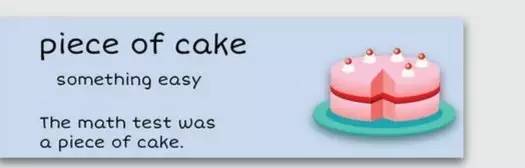
piece of cake 小菜一碟
The math test was a piece of cake.
数学测试很简单。
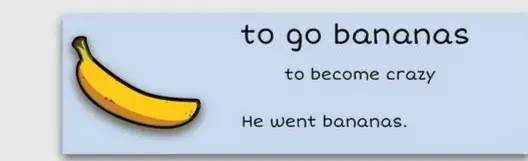
to go bananas 抓狂,歇斯底里
He went bananas.
他神经错乱了。
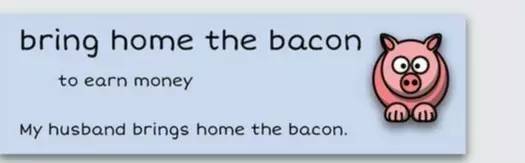
bring home the bacon 养家糊口
My husband brings home the bacon.
我丈夫赚钱养家。
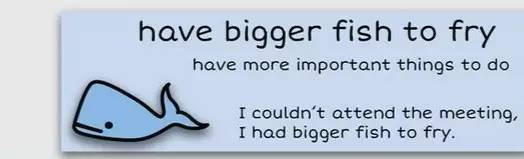
have bigger fish to fry 另有要事
I couldn’t attend the meeting, I had bigger fish to fry.
我没有出席会议,因为我有更重要的事。
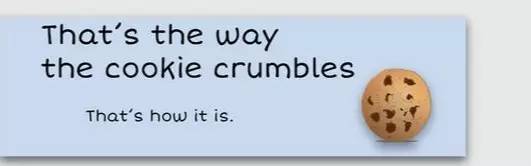
That’s the way the cookie crumbles.
预料之中
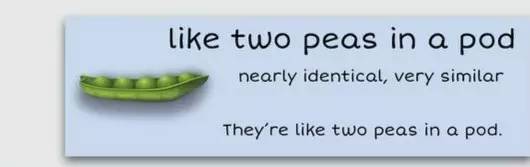
like two peas in a pod 形影不离,一模一样
They are like two peas in a pod.
他们整天腻在一起。
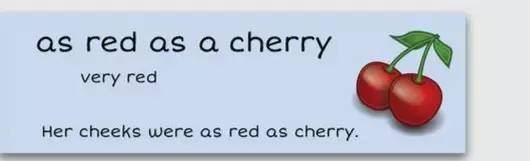
as red as a cherry 像樱桃一样红
Her cheeks were as red as cherry.
她的脸红的像樱桃。
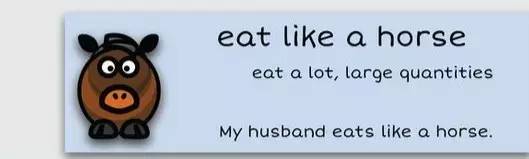
eat like a horse 食量大如牛
My husband eats like a horse.
我丈夫吃得很多。

walk on eggshells 小心翼翼(不伤害某人)
I’ve been walking on eggshells around my boyfriend.
我一直小心翼翼地维护和男朋友的感情。
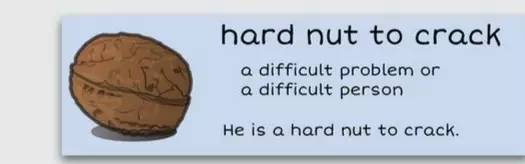
hard nut to crack 难以对付的事或人
He is a hard nut to crack.
他是一个很难相处的人。
衣物类
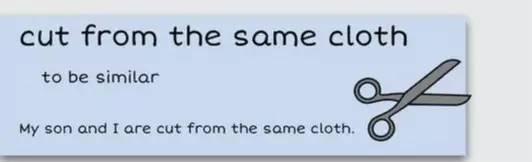
cut from the same cloth 如出一辙
My son and I are cut from the same cloth.
我儿子跟我长得如出一辙
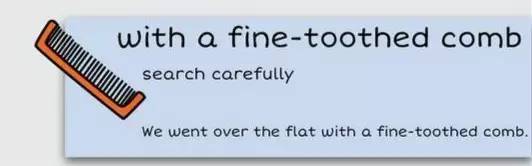
with a fine-toothed comb 严密的审查
we went over the flat with a fine-toothed comb.
我们去了公寓并对它进行了严密的审查。
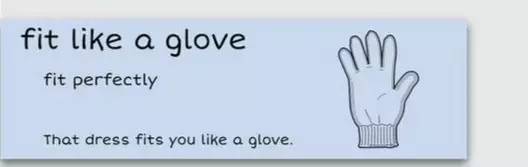
fit like a glove 完全相合
That dress fits you like a glove.
这条裙子很适合你。
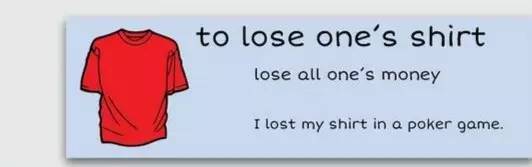
to lose one’s shirt 失去所有的钱
I lost my shirt in a poker game.
我在打扑克中输得精光。
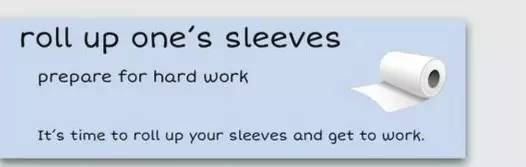
roll up one’s sleeves 准备大干一场
It’s time to roll up your sleeves and get to work.
是时候准备大干一场了!
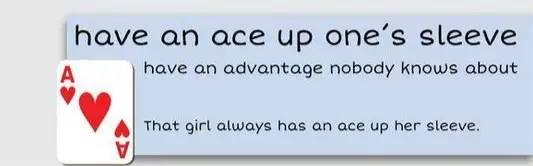
have an ace up one’s sleeve 握有王牌
That girl always has an ace up her sleeve.
这个女孩子总是握有王牌。
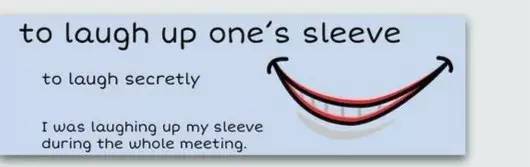
to laugh up one’s sleeve 偷偷地笑
I was laughing up my sleeve during the whole meeting.
在整场会议中我都在偷笑。
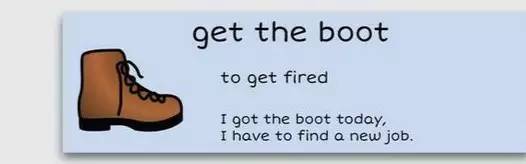
get the boot 解雇
I got the boot today, I have to find a new job.
我被解雇了,我必须找一份新工作。
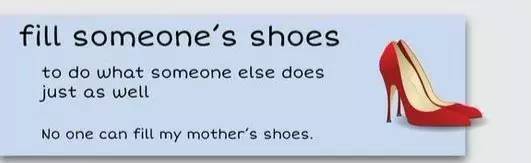
fill someone’s shoes 顶替他人的位置
No one can fill my mother’s shoes.
没有人能顶替我妈妈的位置。
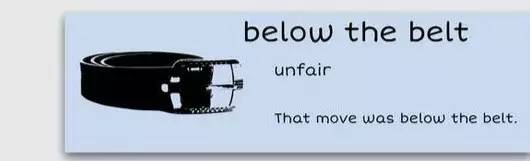
below the belt 不公正的
That move was below the belt.
这种行为是不公正的。
动物类
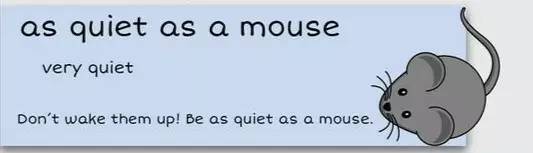
as quiet as a mouse 非常安静
Don’t wake them up! Be as quiet as a mouse.
不要把他们吵醒了!安静一点。
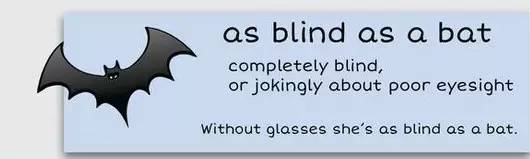
as blind as a bat 看不见,瞎的,也可以用来调笑某人视力不好
Without glasses she’s as blind as a bat.
没戴眼镜她什么也看不见。
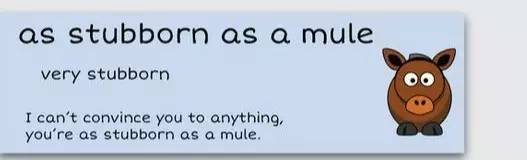
as stubborn as a mule 顽固
I can’t convince you to anything, you’re as stubborn as a mule.
我没法跟你说,你犟得像头牛。
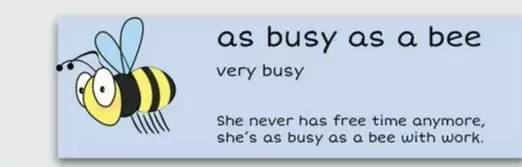
as busy as a bee 超级忙碌
She never has free time anymore, she’s as busy as a bee with work.
她一点空闲时间都没有,工作忙得像蜜蜂。
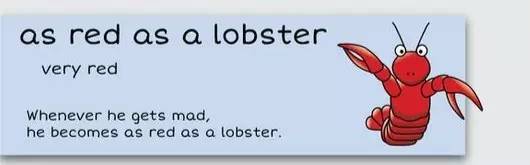
as red as a lobster 通红
Whenever he gets mad, he becomes as red as a lobster.
他生气的时候,脸红地像条龙虾。
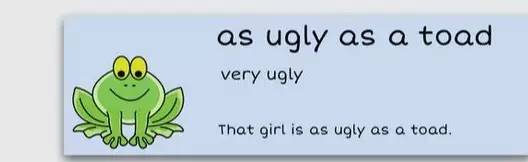
as ugly as a toad 丑
That girl is as ugly as a toad.
那个女孩长得很丑。
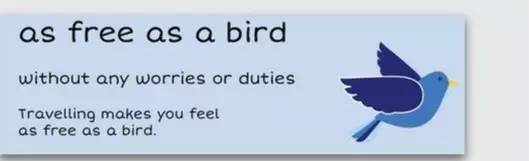
as free as a bird 自由自在
Travelling makes you feel as free as a bird.
旅行会让你感觉自由自在。
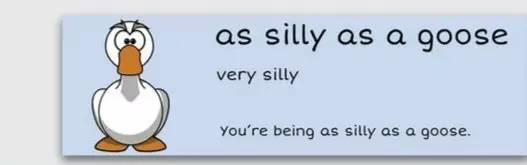
as silly as a goose 笨
You’re being as silly as a goose.
你笨得像鹅一样。
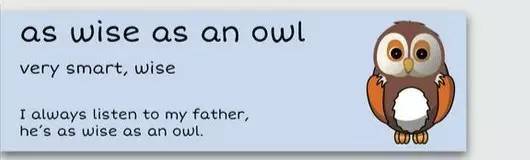
as wise as an owl 聪明
I always listen to my father, he’s as wise as an owl.
我总是听爸爸的话,他很机智。
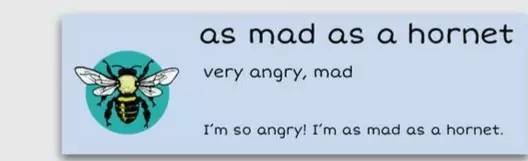
as mad as a hornet 生气,抓狂
I’m so angry! I’m as mad as a hornet.
我太气了!像大黄蜂一样抓狂。 收起阅读 »
【情景对话】被问“How are you”时,除了 “I’m fine” 还可以怎么回答?
你的英语老师可能会教你:当有人问“how are you”的时候,你应该说“I’m fine, thank you. And you?” 你可能牢记了这个“标准答案”,你会毫不犹豫地这样回答。
然而,你可能很少会听到外国人会说:“I’m fine, thank you. And you?” 这就像是书本式的回答。或者,如果你明明感觉不是太好的时候,你又该怎么回答这个问题呢?
“How are you” 的其他问法:
如何回答 “How are you?”, “How is it going?” 这类问题:
下面是完整的关于“what’s up”的回答:
什么时候不回答“how are you” 这个问题:
你需要知道的另一件事:所有这些问题都可以指“Hello”。因此你可以不用回答。用另一种问候可能回答会更加自然。比如:
A: How are you?
B: Hey, how’s it going?
收起阅读 »
然而,你可能很少会听到外国人会说:“I’m fine, thank you. And you?” 这就像是书本式的回答。或者,如果你明明感觉不是太好的时候,你又该怎么回答这个问题呢?
“How are you” 的其他问法:
- How is it going
- What’s up
- What’s happening
如何回答 “How are you?”, “How is it going?” 这类问题:
- Fine. “很好” (这个答案比较简洁,通常话题也就随之结束了)
- Not bad. “还不错” (这个答案相当于”fine”,但比较礼貌)
- Fine, thanks. “很好,谢谢。”(这是正式的回答,通常用于不太熟的人之间)
- Pretty good. “相当好” (说明你真的有一个愉快的一天)
- Great! How are you doing “很好,你呢?” (这也是一个非常正式且有礼貌的回答)
- I’m hanging in there. “几乎快不行了” (这么回答用于你很疲累的时候。通常只会对熟悉的人才会这么回答)
- I’ve been better. “不算太好” (这和” I’m hanging in there” 一样,都用于当你感觉不太好的时候)
- It’s going well. “一切都很好” (这个答案仅用于 “How’s it going”, 不适用于”How are you”)
下面是完整的关于“what’s up”的回答:
- Nothing much. “没什么/ 老样子” (通常话题也就随之结束了。)
- Not a lot. “没什么/没忙什么” (这个回答和“nothing much” 一样。)
- Oh, just the usual. “老样子” (听起来像是你又过了一个极其普通的一天。)
- Oh gosh, all kinds of stuff! “天呐,各种事情。” (通常这样回答完,就会开始和朋友聊一聊你正在忙的事情)
什么时候不回答“how are you” 这个问题:
你需要知道的另一件事:所有这些问题都可以指“Hello”。因此你可以不用回答。用另一种问候可能回答会更加自然。比如:
A: How are you?
B: Hey, how’s it going?
- 你们只是擦肩而过,并且对方没有停下脚步听你的回答的意向。
- 对方问问题时向你招手,就像在说”hi”。
- 对方说话的语气在句尾并没有上升。
收起阅读 »
【情景对话】如何用英语邀请朋友来你的PARTY?
大家都希望在自己的生日的时候或是其他重要时刻,有朋友们在身边和你一起庆祝吧。那么,知道在什么时候邀请朋友,如何有礼貌地询问,会让人对你印象加分,而且更有可能对你说“Yes”.
更多邀请他人和答复邀请的句式:
发出邀请:
接受邀请:
拒绝邀请:
收起阅读 »
更多邀请他人和答复邀请的句式:
发出邀请:
- Do you have some time tomorrow 明天有空吗
- I haven’t been to the movies in ages. Why don’t we go to the movie 我好久没看电影了。要不我们一起去看场电影吧?
- Are you free for our party this evening 今晚开派对,你有空来吗?
- Do you want to go see a movie with me 你愿意和我去看场电影吗?
- We’re going to have a pajama party at my house. Would you like to come 我有几个朋友要来我家开睡衣派对,你来吗?
- How about joining us for dinner tonight 晚上要不要一起吃晚饭?
接受邀请:
- Sure! 当然!
- Yes, let’s do it. 好的!走起 !
- That would be great. 那真是太棒了。
- Certainly, I’d love to. 当然,我很乐意。
- Sounds great! 听上去很不错!
拒绝邀请:
- I’m sorry. I already have another appointment tonight. 很抱歉,我今晚已经有约了。
- Sorry, I’m afraid I can’t. 对不起,我恐怕不行。
- I’d love to, but I already have another plan tonight. 我会很乐意,但我今晚已经有别的计划了。
收起阅读 »

【情景对话】机场常用英文短语及对话
放假要出国旅游?那还不快学一些登机前的常用词汇。不然,到了机场可就要迷糊了哦!
Script 1:
Check-in Assistant: Good morning, Sir. May I see your passport, please?
Ben: Yes, here you are.
Check-in Assistant: One moment please. I see you are flying to Chicago today, correct?
Ben: Yes.
Check-in Assistant: Great. Do you have any check-in baggage?
Ben: No, I only have a carry-on bag.
Checking Assistant: Okay, please make sure you don’t have any liquid over 100 ml. in your bag. Would you like a window seat or an aisle seat?
Ben: Window seat, please.
Check-in Assistant: Okay, your boarding pass is ready. Your boarding gate is 101. Have a nice trip!
Ben: Thanks!
Narration: Sometimes, you might get extra help from a nice check-in assistant.
Script 2:
Ben: Hi, I’m running late. Here are my passport and booking confirmation.
Check-in Assistant: One moment please. Hmm…Your flight is taking off in 40 minutes. The check-in counter has closed.
Ben: Oh no…Do you mean I can’t check-in now?
Check-in Assistant: Well, I can print your boarding pass, but it’s too late to check in any of your luggage. Is that okay?
Ben: No problem, I only have one small bag.
Check-in Assistant: Sure, here ‘s your boarding pass. My colleague will take you through the fast-pass security check to help you catch your flight.
Ben: Thank you very much!
更多机场中常用短语和句型 :
乘务员:
乘客:
收起阅读 »
Script 1:
Check-in Assistant: Good morning, Sir. May I see your passport, please?
Ben: Yes, here you are.
Check-in Assistant: One moment please. I see you are flying to Chicago today, correct?
Ben: Yes.
Check-in Assistant: Great. Do you have any check-in baggage?
Ben: No, I only have a carry-on bag.
Checking Assistant: Okay, please make sure you don’t have any liquid over 100 ml. in your bag. Would you like a window seat or an aisle seat?
Ben: Window seat, please.
Check-in Assistant: Okay, your boarding pass is ready. Your boarding gate is 101. Have a nice trip!
Ben: Thanks!
Narration: Sometimes, you might get extra help from a nice check-in assistant.
Script 2:
Ben: Hi, I’m running late. Here are my passport and booking confirmation.
Check-in Assistant: One moment please. Hmm…Your flight is taking off in 40 minutes. The check-in counter has closed.
Ben: Oh no…Do you mean I can’t check-in now?
Check-in Assistant: Well, I can print your boarding pass, but it’s too late to check in any of your luggage. Is that okay?
Ben: No problem, I only have one small bag.
Check-in Assistant: Sure, here ‘s your boarding pass. My colleague will take you through the fast-pass security check to help you catch your flight.
Ben: Thank you very much!
更多机场中常用短语和句型 :
乘务员:
- Where are you flying to today “请问您的目的地是?”
- What’s your final destination “请问您的目的地是?”
- Are you checking any bags “有需要托运的行李吗?”
- Please place your bag on the belt. “请将您的行李放在传送带上。”
- Here is your boarding pass. “请收好您的登机牌。”
- Your flight leaves from gate…… “您的登机口是….”
- Your luggage will go straight through to your final destination (city name). “您的行李会直接到目的地(城市)”
- You are all set. “都准备好了。”
乘客:
- Excuse me, where is the XXX Airlines (name of the Airline Company) check-in desk “不好意思,请问XX航空公司的办理登机手续的柜台在哪里?”
- Is my flight on time “请问我的航班准点起飞吗?”
- Where is the security check “请问安检通道在哪里?”
- How many bags can I check “请问我可以托运几件?”
收起阅读 »
【演讲技巧】竞选学生会职位的演讲

其实学校里有很多机会能够锻炼你的领导能力,比如学生会的职位,学生代表,课代表等等。但很多人的领导才能被“演讲恐惧症”所埋没了。其实很多人都会有“演讲恐惧症”,但如果你想要成为一个优秀的领导者,就必须要克服这个恐惧。 要如何才能自信地在同学面前做演讲呢?下面的演讲技巧或许可以帮到你。
Script:
Hello, my name is Ben, and I want to be class president. Let me tell you about myself. I like all of my school subjects, and my favorite one is science. I like doing experiments in science labs. In fact, I worked in the lab as an assistant last summer. My lab manager said that I’m a responsible and organized person, because I always made sure everything was in the right place.
Moreover, I’m friendly to all my teachers and classmates. I like helping others. My friends say that I’m easy-going.
I want to be class president. If I could be elected, I would organize class events and listen to all students’ suggestions. Please vote for me!
演讲稿:
大家好,我是Ben, 我想竞选班长。让我来介绍一下我自己。我喜爱所有的学科,我最喜爱的是科学。我喜欢在实验室里做实验。我去年暑假在实验室里做过实验室助理。我的实验室经理说我是一个负责任的,有条理的人,因为我总是将物品都整理得整整齐齐。
其次,我对老师与同学都十分友好。我喜欢帮助别人。我的朋友说我是个平易近人的人。
我想成为班长。如果我当选了,我会组织班级活动并听取所有同学的建议。请投我一票!
竞选班长自我介绍的句型:
1.I hope all of you should believe in me and vote for me.
“希望大家信任我并投我一票。”
2. …+ are my personal interests.
“…是我的个人爱好.”
3. Speaking of my interests, I like…
“说到我的兴趣爱好,我喜欢…。”
4. If I could be given the chance to be the class president, I would…
“假如我有幸成为班长,我会…”
5. As a …., I will ensure that you have a memorable year.
“作为一名…., 我将保证大家一起渡过一个难忘的学年。”
竞选班长自我介绍的技巧:
1.Be prepared and practice. 做好准备,多加练习
紧张的一部分原因是准备不充分。因此,你需要在正式演讲前一遍遍的练习,直到你的演讲几乎没有停顿。这样可以在全班面前演讲时更加自信。
2.Keep eye contact with your audiences. 与你的观众保持眼神交流
当观众在听你的演讲时,他们的好奇心和注意力都放在你身上。当你不和观众互动时,既没有眼神交流,也没有偶尔提问的话,他们可能会感到很无聊,不想听下去。
3. Make the speech brief and easy to be understood. 演讲尽量简短并且通俗易懂
假如你准备一段又长又无聊的演讲是很不明智的。你需要让你的演讲尽量简短,控制在2-4分钟即可,重点提出你的有利优势,并具体解释。这样观众会更容易理解。 收起阅读 »
【演讲技巧】什么样的开场白能抓住观众的注意力?
有了好的开场白,英语演讲便成功了一半。当你一上台时,观众的注意力都在你身上。此时,你要做的不是吸引他们的注意,而是紧紧抓住他们的注意力。一个好的开场白应该起到两个作用:建立你的公信力和建立与观众的联结。本文为大家准备了英语演讲的开场技巧和例子,一起来看看吧!
Here is some expression you can use to start a presentation.
The first greeting phrase I want to share is “Hello and thank you so much for having me. I’m delighted to be here.” This expression is polite and expected. Although it’s not the most creative one, it’s completely acceptable.
After you give a brief greeting, it’s a good idea to tell the audience who you are and why you are there.
Then, you should grab audience’s attention by telling them what you are going to talk about in your presentation. To give out your thesis or your main argument, you can say “I’m going to focus on…”, “I’m going to share with you”,” I’m going to elaborate on…” These sentences give audience an expectation of what your whole presentation is about.
You could also use stronger phrases, such as “It’s more important than ever to…” For example, “In today’s society, it’s more important than ever to protect the endangered species.” This phrase should ring a bell in audience’s mind. The tone of the phrase is affirmative; it establishes your credibility.
更多开场白方法/句式:
1. “What if.”句型:
例如: “What if you lost all of your money.” (假如你失去了所有钱。)
用这个句子提出一个观众们可能从来没想过的问题。你的观众会跟着你的问题去思考或是去想象一个场景,被你带进了你的话题讨论的事情中。
2. Tell a story(讲故事):
用趣闻轶事来开始你的演讲算是比较常见的开场方式了。但是,你所讲的这个故事必须是和你演讲的话题相关的,这样就可以从故事顺其自然的引出演讲主题了。
3. Use a famous quote(名人名言):
引经据典开始你的演讲也是不错的办法。不妨在演讲结束时再次提出这句名言,用一句名言串联你的演讲稿让主题更鲜明。
4. Ask a rhetorical question(问设问句):
例如:” When was last time you felt stressed out?”(上一次你感觉压力很大是什么时候?)这样的问题引导你的观众们主动地将你的演讲和自己的经历联系起来,而不只是被动地听你说。这样会让他们更愿意全程对你的演讲保持兴趣。
5. Giving an amazing and/or shocking fact (给出一个鲜为人知且让人惊讶的真相):
比如: “Did you know that 1 in 7 people in the U.S. face hunger every year.”(你知道在美国每7个人中就有1个人生活在饥荒中吗?)在开场时提出一个让人惊讶的事实真相,让观众中对此感到好奇并且想要继续听你对这个话题进行深入讨论。 收起阅读 »
【情景对话】发牢骚也可以说的很“优雅”
当你遇到不好的经历,你也许会生气或是抱怨。但你的生气也许会让对方变得更有攻击性,问题更加难以得到解决。遇到逆境时,保持冷静和礼貌反而能够更好的解决问题。
当需要投诉他人,或发牢骚的时候,即使你没有做错什么,使用“sorry ”,“excuse me”这样的短语会显得比较有礼貌。对方会感觉你不是那么有攻击性,因此也不容易产生抵触或防卫的心态,更愿意为你提供帮助。所以即使你很生气,试着保持冷静,使用这些礼貌用语开始你的对话。
更多礼貌地表达抱怨的方式:
答复对方的抱怨或投诉的方式:
正面地解决问题:
1.I’m so sorry, but this will never occur / happen again.
很抱歉,但是以后再也不会发生了。
2. I’m sorry, we promise never to make the same mistake again.
很抱歉,我们保证不会再犯同样的错误了 。
3. I’m really sorry; we’ll do our utmost/best not to do the same mistake again.
十分抱歉,我们会尽全力不会让此事发生。
负面的答复:
1.Sorry there is nothing we can do about it.
很抱歉,我们做不了什么。
2.I’m afraid, there isn’t much we can do about it.
恐怕我们对此不能做任何改变。 收起阅读 »
当需要投诉他人,或发牢骚的时候,即使你没有做错什么,使用“sorry ”,“excuse me”这样的短语会显得比较有礼貌。对方会感觉你不是那么有攻击性,因此也不容易产生抵触或防卫的心态,更愿意为你提供帮助。所以即使你很生气,试着保持冷静,使用这些礼貌用语开始你的对话。
更多礼貌地表达抱怨的方式:
- I’m sorry to say this but …….
- I’m afraid there is a slight problem with ……
- Excuse me but ….
- I want to complain about ……..
- I’m sorry to bother you, but…
- I think you might have forgotten to…
答复对方的抱怨或投诉的方式:
正面地解决问题:
1.I’m so sorry, but this will never occur / happen again.
很抱歉,但是以后再也不会发生了。
2. I’m sorry, we promise never to make the same mistake again.
很抱歉,我们保证不会再犯同样的错误了 。
3. I’m really sorry; we’ll do our utmost/best not to do the same mistake again.
十分抱歉,我们会尽全力不会让此事发生。
负面的答复:
1.Sorry there is nothing we can do about it.
很抱歉,我们做不了什么。
2.I’m afraid, there isn’t much we can do about it.
恐怕我们对此不能做任何改变。 收起阅读 »
【情景对话】如何得体地提出反对意见

Script 1:
Ben: I think book stores are outdated. In the near future, everyone will buy and read e-books online.
Charlotte: Hmmm.. I am not sure I agree with you. Paper books will always have its share of market. Some people like the touch and smell of paper books.
Ben: Have you considered that you can buy paper books online as well?
Charlotte: Yes, it’s true, but book stores have more value than displaying and selling books. They create communities for book lovers.
Ben: I respect your opinion, but going to book stores is inconvenient for most people.
Charlotte: That’s true, but we could look at it from another perspective. If the government builds more book stores in the city, and makes them more accessible to the public, people will be more willing to go to books stores.
Ben: Yes, you have a point there. Building more book stores may also encourage people to read more as well.
更多表达你的反对观点的句型:
1.I see your point; however, have you considered…
我理解你的想法,但是,你有考虑过….吗?
2.I understand your concern; however, …
我理解你的担心,但是,…..
3.I respect your opinion, but…
我尊重你的想法,但是….
4.In my opinion…
在我看来….
5.We could look at it from this perspective.
我们也可以从这个方面来看问题。
6.I’d like to lay out another perspective.
我想提出另一个角度的观点。
7.That’s not always true.
也不一定全对的。
8.That’s not always the case.
这也不一定都是这样。
9.I am afraid I disagree.
我恐怕不能同意。
10.I’m not so sure about that.
我对此不太确定。
11.You have a point there, but…
你说得对,但是… 收起阅读 »
【情景对话】旅行必备-用英语问路指路

在国外旅行的时,找不到方向是常有的事情。这个时候,问身边的当地人一定是最直接的方式。当然,你不仅要知道该如何用英语问路,也要能听得懂对方给你指路的话。一起来听下面的两段对话,掌握一些常用的问路和指路的句子吧! 出国会很有用哦。
Script 1:
Charlotte: Excuse me. Could you tell me how to get to the Public Library from here?
Stranger: Sure. Walk up fifth avenue and when you reach 42nd St., you’ll see the public library’ on the left.
Charlotte: Thanks a lot. Is it far from here?
Stranger: It’s fifteen blocks.
Charlotte: It’s a long way to walk.
Stranger: You can also take the NQR train to 42nd street, and get off at Battery Park Station, you will see the Public Library.
Charlotte: Oh, great! Thanks! Have a good day.
Narration: How about giving direction to a driver?
Script 2:
Charlotte: Please take me to Highline Park.
Driver: Oh sorry, I’m new to the city. Could you give me directions?
Charlotte: Sure. First, drive along Fifth Avenue to 23rd street and turn left. When you hit Sixth Avenue, you will see a tall building. You can drop me off there.
Driver: Sure!
更多指路和问路的短语:
问路用语:
1. Excuse me, could you tell me how to get to …?
打扰一下,你可以告诉我怎么去…吗?
2. Excuse me, do you know where the … is?
打扰一下,你知道…在哪里吗?
3. I’m looking for …
我在找…
4. Is this the right way for …?
这是去…的路吗?
指路用语:
1. I’m sorry, I don’t know.
不好意思,我不知道。
2.Sorry, I’m not from around here.
抱歉,我也不是本地人。
3.Keep going straight.
一直直走。
4.Turn left/right on the second traffic lights.
向左/右走,到第二个红绿灯。
5.It’s about …minutes away.
差不多是…分钟的距离。
6. It’s …. blocks away.
…个街区的距离。
7.You will pass a bridge/ a fire station/ ….
你会路过一个桥/一个消防站/…
8. It’s on your right/left.
在你的右手/左手边。 收起阅读 »
【情景对话】准确地说出你的感受-“开心”的不同表达方式
幸福感有许多微妙的程度与维度。当你说“I’m happy”,你可能觉得很激动,自豪,惊喜,亦或是感到乐观等。因此,除了说“I’m happy”,还有许多方式来表达你所感受到何种的快乐。
Script 1:
Charlotte: I’m glad it’s Friday.
Ben: Me too. It has been a long week for me. Do you have any plan for the weekend?
Charlotte: I’m going to the lake with my family. I’m really excited about it.
Ben: That sounds great. Have fun.
Narration: Sometimes, when you hear good news, you might feel like jumping for joy. It’s great to share your happiness with your friends immediately.
Script 2:
Charlotte: Guess what, I got the lead role in the play! I’m thrilled.
Ben: Wow! That’s fantastic!
Charlotte: I was shocked when I heard the news. I couldn’t believe it was true. You know I’ve wanted that role!
Ben: Congratulations! I’m so happy for you! I’m sure you’ll be great in the show!
Charlotte: Thanks! I can’t wait to tell my mom the good news.
表达你的开心,你可以说:
I’m glad.
I’m absolutely delighted.
I’m thrilled.
I’m over the moon.
I’m really pleased.
I couldn’t be happier.
Nothing would please me more.
当你听到别人与你分享开心的消息时,你应该说:
What great / wonderful / fantastic news!
Congratulations! Congratulations on the / your …
I’m jealous! (when you are actually not jealous about your friend)
You deserve it!
I’m so happy for you!
I’m proud of you!
That is fantastic / wonderful / great / marvelous!
雨果说:”有一种东西,比我们的面貌更像我们,那就是我们的表情。还有一种东西,比表情更像我们,那就是我们的笑容。”
无论用什么语言 ,笑容是分享喜悦的最好表达方式。 收起阅读 »
Script 1:
Charlotte: I’m glad it’s Friday.
Ben: Me too. It has been a long week for me. Do you have any plan for the weekend?
Charlotte: I’m going to the lake with my family. I’m really excited about it.
Ben: That sounds great. Have fun.
Narration: Sometimes, when you hear good news, you might feel like jumping for joy. It’s great to share your happiness with your friends immediately.
Script 2:
Charlotte: Guess what, I got the lead role in the play! I’m thrilled.
Ben: Wow! That’s fantastic!
Charlotte: I was shocked when I heard the news. I couldn’t believe it was true. You know I’ve wanted that role!
Ben: Congratulations! I’m so happy for you! I’m sure you’ll be great in the show!
Charlotte: Thanks! I can’t wait to tell my mom the good news.
表达你的开心,你可以说:
I’m glad.
I’m absolutely delighted.
I’m thrilled.
I’m over the moon.
I’m really pleased.
I couldn’t be happier.
Nothing would please me more.
当你听到别人与你分享开心的消息时,你应该说:
What great / wonderful / fantastic news!
Congratulations! Congratulations on the / your …
I’m jealous! (when you are actually not jealous about your friend)
You deserve it!
I’m so happy for you!
I’m proud of you!
That is fantastic / wonderful / great / marvelous!
雨果说:”有一种东西,比我们的面貌更像我们,那就是我们的表情。还有一种东西,比表情更像我们,那就是我们的笑容。”
无论用什么语言 ,笑容是分享喜悦的最好表达方式。 收起阅读 »

